
Introduction
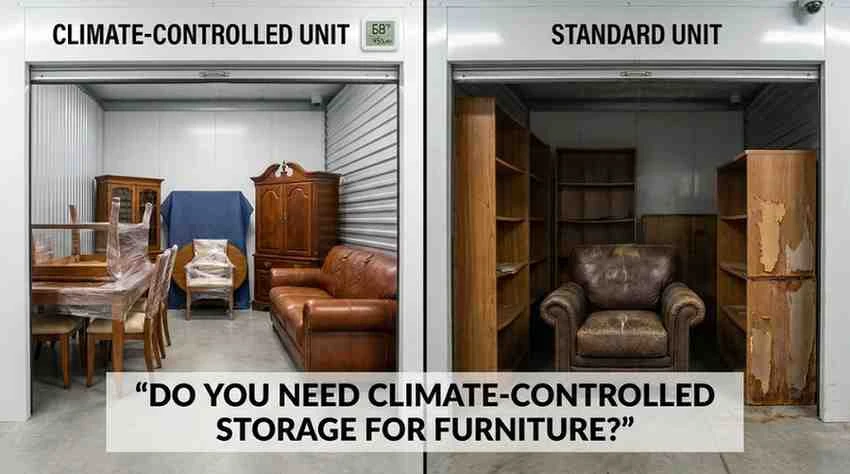
You’ve got a move coming up, a home renovation underway, or a garage full of furniture you’re not ready to part with. You know you need a storage unit. But here’s the question that trips up almost everyone: do you actually need climate-controlled storage for furniture, or is a standard unit good enough?
It’s a fair question — and an important one. The wrong answer can mean warped wood, cracked leather, mold on upholstery, and furniture that’s worth far less when it comes out of storage than when it went in. The right answer depends on what you’re storing, how long it’s going in, and what the environmental conditions look like where you live.
This guide breaks all of that down clearly. By the end, you’ll know exactly which types of furniture need climate-controlled storage, which can survive a standard unit, what risks you’re actually taking when you skip temperature and humidity control, and how to make the smartest storage decision for your specific situation.
What Is Climate-Controlled Storage?
Before we answer the furniture question directly, it helps to understand what climate-controlled storage actually means — because the term gets used loosely.
Climate-controlled storage refers to self-storage units located inside a fully enclosed, secure building where temperature and humidity are actively managed throughout the year. Unlike standard outdoor-access units that are essentially weatherproof rooms exposed to seasonal extremes, climate-controlled units maintain a more consistent indoor environment by using HVAC systems to moderate heat, cold, and moisture levels.
In practical terms, this means:
- Temperature regulation — The unit stays within a more stable temperature range year-round, protecting items from extreme summer heat and deep winter cold
- Humidity management — Lower, more consistent humidity levels reduce the conditions that cause mold, mildew, swelling, and corrosion
- Indoor access — Your unit is inside a building rather than exposed to rain, wind, and outdoor air
- Better air circulation — Ventilation systems keep air moving through the facility, reducing stagnant, damp conditions
At Elk Country Storage Co., the climate-controlled storage units are designed specifically for temperature-sensitive belongings — including furniture, electronics, documents, antiques, and other items that don’t hold up well against Idaho’s seasonal extremes.
Why Temperature and Humidity Are Furniture’s Biggest Enemies
Most people worry about theft or physical damage when thinking about storage. The real threat to furniture — especially over months — is the environment itself.
Heat Damage
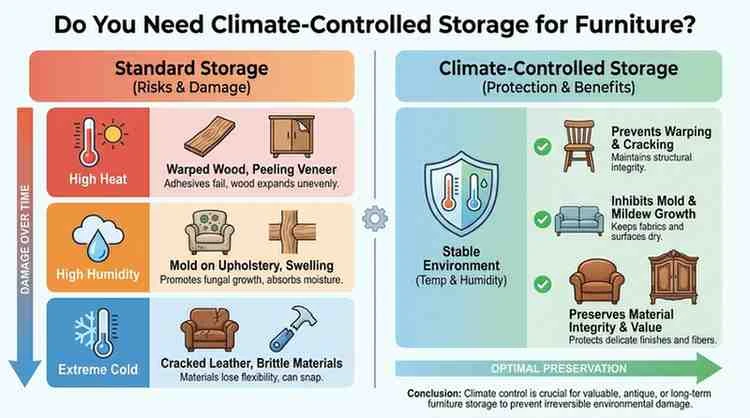
Storage units without climate control can reach extreme interior temperatures in summer. Depending on construction, sun exposure, and outdoor temperatures, a non-climate-controlled unit can climb well above ambient outdoor temperatures during peak summer heat. What does that do to furniture?
- Wood dries out and cracks — Prolonged heat draws moisture out of wood fibers, causing shrinkage, splitting along grain lines, and cracking of finishes
- Adhesives weaken — Many pieces of furniture, especially flat-pack or engineered wood, rely on adhesives that soften and fail under sustained heat
- Leather cracks and fades — Leather furniture loses its natural oils in heat, becoming brittle and prone to surface cracking
- Foam degrades — The foam padding in sofas, chairs, and mattresses breaks down faster under sustained high temperatures
- Veneer lifts — The thin wood veneer on many modern furniture surfaces can bubble, warp, and peel away from its backing in the heat
Cold Damage
On the opposite end, Idaho winters bring genuinely cold temperatures to the Clearwater Valley — and unheated storage units can approach or match outdoor temperatures. This creates its own set of problems:
- Wood contracts and may crack — Just as heat causes expansion, cold causes contraction. Repeated freeze-thaw cycles stress wood joints and cause splitting
- Leather becomes stiff and brittle — Cold temperatures remove flexibility from leather, increasing the risk of cracking when the furniture is eventually moved
- Metal components corrode — Drawer slides, hinges, and decorative hardware on furniture are vulnerable to condensation that forms when cold units warm up
Humidity and Moisture Damage
Humidity is arguably the most destructive environmental factor for furniture in storage. High moisture levels — combined with the lack of airflow in a sealed storage unit — create conditions where mold, mildew, and structural damage happen quickly.
- Wood swells and warps — Wood is hygroscopic, meaning it absorbs and releases moisture from the air. High humidity causes swelling that can permanently warp table tops, dresser drawers, and cabinet doors
- Mold and mildew grow — Upholstered furniture — sofas, chairs, ottomans, headboards — provides the organic material that mold needs to thrive. A slightly damp piece of upholstery in a warm, unventilated unit is all mold needs
- Fabric stains and deteriorates — Humidity causes fabrics to discolor, weaken, and develop musty odors that can be very difficult or impossible to remove
- Particleboard swells permanently — Many furniture pieces — bookshelves, TV stands, flat-pack furniture — use particleboard or MDF, which absorbs moisture and swells in ways that cannot be reversed
Which Furniture Needs Climate-Controlled Storage?
Here’s the direct answer most people are looking for. Use this as your decision guide.
Wood Furniture — Yes, Climate Control Is Recommended
Solid wood furniture — dining tables, bed frames, dressers, armoires, wooden chairs, bookshelves — is the category most at risk from temperature and humidity swings. Real wood breathes, expands, and contracts with environmental changes. In a standard unit exposed to Idaho’s summers and winters, solid wood furniture will experience those cycles repeatedly — and the cumulative stress adds up.
The verdict: For any solid wood furniture stored longer than a few weeks, climate-controlled storage is the right call. The cost of refinishing or repairing warped wood almost always exceeds the cost difference between standard and climate-controlled storage.
Antique and Heirloom Furniture — Yes, Absolutely
Antique furniture in Idaho is valuable for reasons that make it uniquely vulnerable to storage damage: age, original finishes, original hardware, and construction techniques that pre-date modern moisture-resistant materials. An antique dining set that survived a century in a home environment is not automatically equipped for a season in a non-climate-controlled storage unit.
- Original finishes are more susceptible to heat, cold, and humidity than modern lacquers
- Animal-hide glues used in older furniture dissolve in high humidity
- Aged wood is often more brittle and less forgiving of expansion and contraction
The verdict: Antique and heirloom furniture belongs in climate-controlled storage, full stop. The preservation of value and integrity demands it.
Upholstered Furniture — Yes, Strongly Recommended
Sofas, sectionals, recliners, upholstered headboards, and dining chairs with fabric or leather seats are all at meaningful risk in standard storage units. The combination of fabric (which absorbs and holds moisture), foam padding (which degrades), and the general warmth of a sealed unit creates favorable conditions for mold growth, odor development, and fabric deterioration.
The verdict: Upholstered furniture should be in climate-controlled storage whenever possible, especially for storage periods longer than a month.
Particleboard, MDF, and Flat-Pack Furniture — Yes, With Reservations
IKEA-style furniture and other pieces built from engineered wood products are actually more vulnerable to moisture damage than solid wood, because particleboard and MDF can absorb humidity and swell irreversibly. If you’re storing a $300 bookshelf in a standard unit and it comes out with swollen, non-functional drawer slides, the loss isn’t catastrophic — but it is frustrating and avoidable.
The verdict: If the piece is valuable or important to keep functional, climate-controlled storage is recommended. If it’s inexpensive and replaceable, a standard unit may be an acceptable risk.
Metal and Plastic Furniture — Standard Storage May Be Fine
Metal patio furniture, plastic chairs, and similar items are generally more tolerant of temperature swings and humidity. Metal can rust with sustained moisture exposure, but for short-term storage or items that aren’t particularly valuable, a standard unit with proper packing and some moisture protection (silica gel, proper covering) can work.
The verdict: Standard storage may be acceptable for metal and plastic furniture, especially for short-term storage. Add rust protection and avoid leaving items in contact with damp flooring.
Climate-Controlled vs. Standard Storage for Furniture: Direct Comparison
| Factor | Climate-Controlled Storage | Standard Storage |
|---|---|---|
| Temperature stability | Actively managed — protects wood, leather, foam | Varies seasonally — extreme heat in summer, cold in winter |
| Humidity control | Moderated — reduces mold, warping, swelling risk | Uncontrolled — high risk in humid conditions |
| Best for furniture | Solid wood, antiques, upholstered, heirlooms | Plastic, metal, inexpensive/replaceable items |
| Long-term storage | Strongly recommended | Higher risk over time |
| Short-term storage (< 2 weeks) | Preferred but standard may be acceptable | Acceptable with proper packing |
| Cost | Higher monthly rate | Lower monthly rate |
| Peace of mind | High — stable, protected environment | Variable — depends on season and climate |
Real-Life Scenarios: When Climate-Controlled Storage for Furniture Makes the Difference
Scenario 1: Staging a Home for Sale in Kamiah
A family in Kamiah is listing their home and wants to remove excess furniture to help buyers visualize the space. They move a solid oak dining set, two upholstered armchairs, and a mahogany sideboard into storage for two to three months while the home is on the market. They choose a climate-controlled storage unit at Elk Country Storage Co. rather than a standard unit, because the dining set alone represents significant value — and the storage period extends through the warmer months when a non-climate-controlled unit could get extremely hot.
When the home sells and they retrieve their furniture, everything comes out in the same condition it went in.
Scenario 2: Home Renovation with Furniture in Storage
A Kooskia homeowner is renovating their master bedroom and living room — new floors, fresh paint, and updated trim throughout. All of the furniture goes into a storage unit in Kooskia for six to eight weeks during construction. Because the renovation spans late fall into winter, and the furniture includes an upholstered bed frame and a solid wood dresser, they choose climate-controlled storage to avoid cold-weather contraction damage.
Scenario 3: Long-Distance Relocation with a Storage Gap
A family relocating from Kamiah to a position out of state needs to store their household contents for four months while they wait for their new home’s closing date. Their belongings include a leather sectional, a solid walnut coffee table, and a set of custom-built bedroom furniture. Because the storage period is long, the items are high-value, and the risk of damage is compounded by an extended stay in a unit, they choose climate-controlled self storage — paying the modest monthly premium to protect a furniture collection worth several thousand dollars.
How Climate-Controlled Storage Protects Different Furniture Types
Wood Furniture Storage
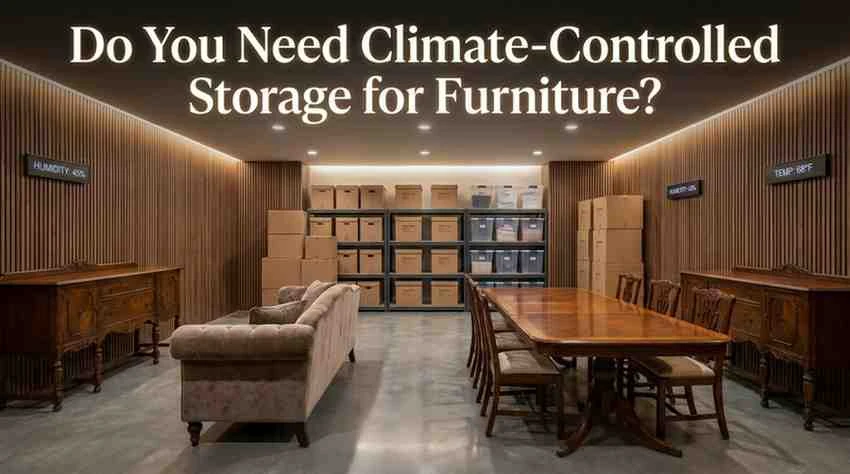
Climate-controlled storage protects wood furniture by reducing the temperature and humidity swings that cause wood to expand, contract, warp, crack, and deteriorate. In Idaho, where winter temperatures in the Clearwater Valley can drop well below freezing and summer temperatures climb significantly, unheated and uncooled storage units put wood furniture through genuinely stressful environmental cycles.
Prep tips for wood furniture in storage:
- Clean and dry all surfaces before storage
- Apply a quality furniture polish or conditioner to protect the finish
- Wrap pieces in breathable furniture pads or moving blankets — not plastic, which traps moisture
- Disassemble tables and large pieces to reduce stress on joints
- Elevate pieces off the floor on pallets or boards
Upholstered Furniture Storage
Sofas, chairs, and upholstered headboards benefit from climate-controlled storage primarily because fabric and foam are both vulnerable to humidity and mold. Even a small amount of retained moisture from normal home air — sealed inside a storage unit — can create mold-friendly conditions over weeks.
Prep tips for upholstered furniture in storage:
- Vacuum all upholstery before storage to remove debris and dust
- Clean any stains completely and allow pieces to dry thoroughly
- Cover with breathable furniture covers — never airtight plastic sheeting
- Do not stack items on top of upholstered pieces, which can deform cushions
- Place silica gel packets near upholstered items to absorb ambient moisture
Antique Furniture Storage
Antiques represent irreplaceable value. Climate-controlled storage is not optional for antique furniture — it’s essential. The combination of aged materials, original finishes, and construction techniques that pre-date modern moisture resistance makes antiques uniquely susceptible to environmental damage.
For more on protecting valuable belongings in storage, Elk Country Storage Co.’s climate-controlled storage page covers the full range of items that benefit from a stable storage environment.
Pros and Cons of Climate-Controlled Furniture Storage
Pros
- Maximum protection for wood, upholstery, antiques, and leather furniture
- Mold and mildew prevention through humidity management
- Peace of mind — especially for long-term storage or high-value pieces
- Indoor access — easier to load and unload in bad weather conditions
- Better air quality inside the unit — cleaner, less musty environment
- Preserves resale value — furniture comes out of storage in the same condition it went in
Cons
- Higher cost than standard storage units — the premium is real, though often modest relative to the value of what’s being protected
- Limited availability — climate-controlled units fill up faster, so reserving early matters
- Not always necessary — for metal furniture, plastic items, or very short-term storage, the added cost may not be justified
Choosing the Right Storage Unit Size for Furniture
Knowing you need climate-controlled storage is only half the decision. The other half is choosing the right unit size to fit your furniture without overcrowding it — overcrowding reduces airflow and increases the risk of damage.
Elk Country Storage Co.’s storage unit size guide walks through exactly what fits in each unit size. As a general reference:
- 5×10 unit — One room of furniture: a bed frame, dresser, and a few boxes
- 10×10 unit — Two to three rooms of furniture; suitable for a living room set or bedroom suite
- 10×15 unit — Three to four rooms; fits dining sets, bedroom furniture, and appliances
- 10×20 unit — Full home contents or large furniture collections
If you’re unsure what size you need, calling Elk Country Storage Co. at (208) 630-3753 and describing your furniture will get you a quick, accurate recommendation.
Related Storage Guides from Elk Country Storage Co.
If you’re making storage decisions around a larger move, renovation, or seasonal transition, these resources cover adjacent topics in depth:
- Moving and transition storage: Short-Term Self Storage When Moving — covers how to use temporary storage to simplify a move, including which items go into storage first and how to manage timing
- Seasonal gear storage: How to Store Camping Gear in Winter — practical prep steps for camping equipment alongside furniture during winter storage
- Unit sizing: Storage Unit Size Guide — helps you choose the right unit so your furniture isn’t overcrowded or underprotected
- Business storage: Business Storage Kamiah — for commercial furniture, office equipment, and business inventory storage needs
Frequently Asked Questions: Climate-Controlled Storage for Furniture
Do you need climate-controlled storage for furniture? For most furniture — especially solid wood, upholstered pieces, leather, and antiques — climate-controlled storage is strongly recommended. These materials are directly affected by temperature and humidity swings, which can cause warping, cracking, mold, and deterioration over time, particularly in long-term storage.
How hot can a storage unit get without climate control? A non-climate-controlled storage unit can reach temperatures significantly higher than outdoor ambient temperatures in summer due to heat absorption through metal walls and roofing. This level of heat can damage wood furniture finishes, weaken adhesives, break down foam padding, and crack leather.
Can humidity damage wood furniture in storage? Yes — humidity is one of the most damaging forces for wood furniture in storage. High humidity causes wood to absorb moisture, swell, and warp. Extended exposure can cause permanent structural deformation and surface damage that is costly or impossible to repair.
Should I be worried about a cold storage unit damaging furniture? Yes, particularly for solid wood and leather pieces. Cold causes wood to contract, which stresses joints and can cause cracking. Leather loses flexibility in the cold and becomes prone to cracking when handled. Repeated freeze-thaw cycles are especially hard on furniture over a winter storage season.
Is climate-controlled storage worth it for furniture? Almost always yes — when you weigh the monthly cost difference between standard and climate-controlled storage against the replacement or repair cost of furniture damaged by heat, cold, or humidity, climate control is nearly always the better value. This is especially true for high-quality or irreplaceable pieces.
Can mold grow on furniture in a non-climate-controlled unit? Yes. Mold grows wherever there is moisture, organic material, and limited airflow — conditions that non-climate-controlled storage units can easily provide. Upholstered furniture is particularly vulnerable. Even furniture that appears dry when placed in storage can develop mold if the unit’s humidity rises over time.
Does climate-controlled storage prevent mold? Climate-controlled storage significantly reduces the humidity conditions that encourage mold growth. However, it does not replace proper preparation — all furniture should be completely clean and dry before going into any storage unit.
What is the difference between climate-controlled and standard storage for furniture? Climate-controlled storage maintains a more stable indoor temperature and humidity environment year-round. Standard storage is more exposed to outdoor seasonal extremes. For furniture, that difference translates directly into protection — or risk.
How long can furniture stay in climate-controlled storage? Furniture can remain safely in a well-maintained climate-controlled storage unit indefinitely, provided it was properly prepared before storage. Annual checks to inspect for any signs of moisture, pest activity, or damage are a good practice.
Should I rent climate-controlled storage for a short move? For moves lasting less than two to three weeks, the risk to furniture in a standard unit is lower — especially if the storage period doesn’t span peak summer heat or deep winter cold. For moves of a month or longer, climate-controlled storage is the safer and usually wiser choice.
Conclusion
The question of whether you need climate-controlled storage for furniture has a clear answer for most people: if your furniture has value — financially, sentimentally, or practically — climate-controlled storage is worth it. Wood warps. Leather cracks. Upholstery grows mold. Antiques deteriorate. Standard storage units expose all of these materials to the exact conditions that cause exactly those outcomes.
The good news is that climate-controlled storage at Elk Country Storage Co. is designed precisely for this situation — offering indoor climate regulation, humidity management, and a stable storage environment for furniture, electronics, documents, antiques, and any belongings that deserve better than basic space.
Whether you’re staging a home, managing a long-distance move, surviving a renovation, or simply giving your furniture a safe place to wait out a season, the right storage decision starts with understanding what your furniture actually needs — and acting on it before the damage is done.
Reserve Your Climate-Controlled Storage Unit Today
Don’t leave your furniture’s condition to chance. Protect what you’ve invested in with secure, climate-controlled storage in Kamiah and Kooskia, Idaho.
📞 Call: (208) 630-3753 📧 Email: elkcountrystorageco@gmail.com 🌐 Reserve online: elkcountrystorageco.com/reserve
Kamiah: 303 Locust Rd, Kamiah, ID 83536 Kooskia: 4689 Hwy 13 South, Kooskia, ID 83539
✓ Month-to-month rentals ✓ No deposit required ✓ 24/7 gate access ✓ Climate-controlled units available
Elk Country Storage Co. serves Kamiah, Kooskia, Orofino, Grangeville, Stites, Harpster, Lewiston, and the greater Clearwater Valley, Idaho.