
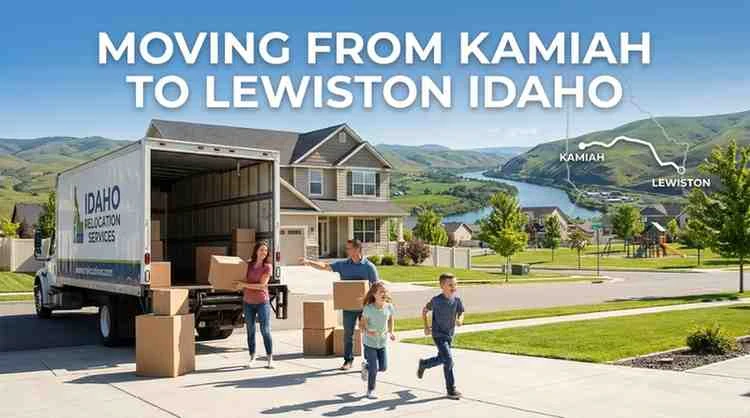
Kamiah is a place people choose deliberately. Quiet, close-knit, surrounded by the Clearwater River country — it’s the kind of community that earns deep loyalty from the people who settle there. But life changes. Jobs change. Families grow. Healthcare needs evolve. And for many Kamiah residents, the moment eventually comes when Lewiston — Idaho’s second-largest city, just over an hour down US-12 — starts to make practical sense.
Moving from Kamiah to Lewiston Idaho is one of the most common within-region relocations in North Central Idaho, and for good reason. Lewiston offers employment across multiple industries, full-service healthcare, a broader range of housing options, quality schools, and the kind of commercial infrastructure that simply isn’t available in smaller Clearwater Valley communities. At the same time, it sits at the confluence of the Snake and Clearwater Rivers — so the outdoor access that defines life in this part of Idaho doesn’t go away when you cross the county line.
This guide covers everything you need to know before making the move: how the two communities compare on cost, what Lewiston’s neighborhoods look like, where the employment opportunities are, what the schools and healthcare situation is, and how to plan the logistics of the relocation itself from start to finish.
Why Are People Moving from Kamiah to Lewiston Idaho?
The most common reasons Kamiah-area residents relocate to Lewiston are employment opportunities, access to expanded healthcare services, housing variety, and proximity to a broader range of commercial and educational resources.
Lewiston, the seat of Nez Perce County and the population center of the Lewis-Clark Valley, has an economic footprint significantly larger than anything available in the smaller Clearwater Valley communities. For residents who’ve outgrown what rural central Idaho can offer professionally, Lewiston is typically the nearest city with a meaningful job market.
The healthcare factor is significant and underappreciated. Kamiah and Kooskia have clinic-level services, but serious medical needs — specialist care, surgical services, diagnostic imaging, oncology, cardiology — require a trip to Lewiston. For retirees, families with health considerations, or anyone for whom healthcare proximity is a priority, the commute gets old fast.
Housing variety is another driver. Kamiah’s housing inventory is limited and often older. Lewiston offers a broader range of property types, price points, neighborhoods, and new construction — giving buyers more options to match their budget and lifestyle.
Finally, for families with school-age children, Lewiston’s school district offers more programs, facilities, and extracurricular depth than smaller rural districts — an increasingly important consideration for families prioritizing education.
How Does the Cost of Living Compare Between Kamiah and Lewiston?
Lewiston is modestly more expensive than Kamiah across most cost-of-living categories, with housing being the most notable difference — though Lewiston remains significantly more affordable than Boise, Coeur d’Alene, and most Pacific Coast cities.
| Category | Kamiah, ID | Lewiston, ID | Notes |
|---|---|---|---|
| Median home price | Lower — limited inventory, older stock | Moderate — broader range, more options | Both below Idaho’s statewide average |
| Utilities | Similar to Lewiston | Moderate | Lewiston slightly higher due to larger homes |
| Groceries | Limited options, some price premium | More competitive — full grocery market | Lewiston’s larger market base drives more options |
| Transportation | Lower (rural distances, less traffic) | Slightly higher (more urban, more vehicle use) | Fuel costs similar; Lewiston has more commute variability |
| Property taxes | Lewis County rates apply | Nez Perce County rates apply | Both competitive by Idaho standards |
| Healthcare costs | Limited local access — travel required | Full-service access locally | Lewiston significantly reduces healthcare travel cost |
The practical cost comparison often favors Lewiston more than the raw numbers suggest, because the cost of traveling to Lewiston for healthcare, specialty shopping, and services from Kamiah adds up significantly over time. Many Kamiah residents already make weekly or bi-weekly Lewiston trips — and the cost of those trips is invisible in a direct comparison but real in a monthly budget.
What Is It Like Living in Lewiston Idaho?
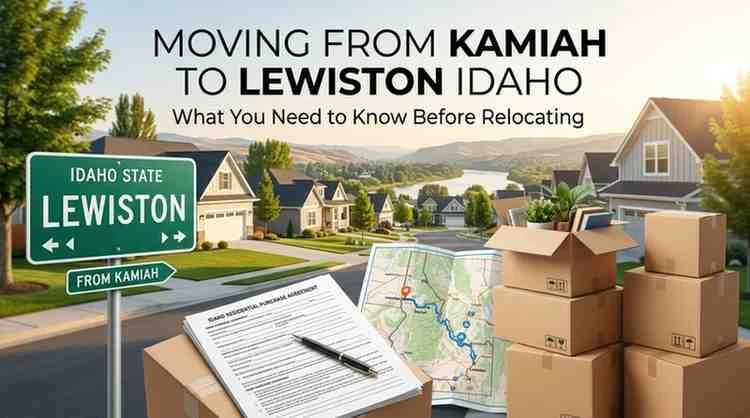
Lewiston offers a genuine small-city lifestyle at the confluence of two major river systems — urban enough for convenience and full services, small enough to retain community character and outdoor access.
Lewiston’s population sits in the 33,000–35,000 range, making it Idaho’s second-largest city by some measures. It shares the Lewis-Clark Valley with Clarkston, Washington, directly across the Snake River, and the combined metro population is closer to 60,000 — enough to support a genuine commercial and cultural infrastructure.
Climate: Lewiston sits in a river valley at a relatively low elevation — around 740 feet — which gives it one of the mildest climates in Idaho. Winters are notably warmer than Kamiah and the Clearwater Valley, with less snow accumulation and shorter hard-freeze periods. For Kamiah residents tired of long winters, this is often a positive surprise.
Community atmosphere: Lewiston has the feel of a working river town that has grown without losing its identity. It’s a place where people know their neighbors, local businesses still compete effectively, and civic pride is genuine. The transition from Kamiah’s smaller, more rural community culture takes some adjustment — but most transplants from the Clearwater Valley find Lewiston feels more like a larger version of what they know than a fundamentally different kind of place.
Recreation: The Snake and Clearwater Rivers converge at Lewiston’s doorstep. Fishing, boating, jet skiing, and whitewater access are all immediately available. The valley walls rise steeply above the city, offering hiking and trail access minutes from the edge of town. The outdoor culture that defines North Central Idaho doesn’t diminish in Lewiston — it expands in some directions.
What Are the Best Neighborhoods in Lewiston for New Residents?
Lewiston’s neighborhoods range from established historic areas near the river to newer developments on the Lewiston Orchards plateau above the valley — each with different characters, price points, and practical attributes.
What Neighborhoods Work Best for Families?
The Lewiston Orchards area — the plateau above the valley floor — is generally considered the most family-oriented part of greater Lewiston. It offers newer housing stock, proximity to schools, more yard space, and a suburban character that suits families with children. The tradeoff is a longer commute down into the valley for work and shopping, though the drive is typically 10–15 minutes.
The Bryden Canyon area also attracts families, with good school proximity and established neighborhoods that have maintained their character over time.
What Neighborhoods Suit Retirees?
Retirees often prefer the lower valley neighborhoods closer to the river — established areas with walkable proximity to downtown, medical facilities, and the waterfront. Lower-maintenance housing options, including condominiums and smaller single-family homes, are more concentrated in these areas than on the plateau.
Where Are Schools and Shopping Most Accessible?
The Orchards area has the best proximity to grocery stores, retail, and Lewiston’s main commercial corridor, while valley-floor neighborhoods have easier access to the downtown core, medical facilities, and the river. Most Lewiston residents find either area has acceptable access to both.
Where Are the Most Affordable Housing Options?
The older established neighborhoods on the valley floor — away from waterfront premium areas — tend to offer the most affordable entry points into Lewiston’s housing market. Older home stock requires more maintenance consideration, but purchase prices are often meaningfully lower than comparable homes on the plateau.
What Employment Opportunities Are Available in Lewiston?
Lewiston’s economy is more diversified than most North Central Idaho communities, with significant employment in manufacturing, healthcare, education, transportation, and retail — making it a realistic destination for professional relocation from smaller Clearwater Valley communities.
Manufacturing: Clearwater Paper (one of the region’s largest employers), food processing, and metal fabrication provide a substantial blue-collar employment base. These industries offer stable, often well-compensated positions that don’t exist at comparable scale in the Clearwater Valley.
Healthcare: St. Joseph Regional Medical Center is the major regional healthcare employer and one of Lewiston’s largest private-sector employers. Healthcare employment spans physicians, nursing, allied health professionals, and administrative roles.
Education: Lewis-Clark State College is a four-year institution providing academic employment and supporting a student population that drives related local business. The Lewiston School District is also a significant employer.
Transportation and logistics: Lewiston’s position as the furthest inland seaport in the Pacific Northwest — accessible via the Snake River navigation channel — supports ongoing transportation and logistics employment.
Small business: Lewiston’s commercial base supports a healthy small-business environment across retail, food service, construction, professional services, and trades — opportunities that don’t require large-employer hiring cycles.
How Good Are the Schools in Lewiston Idaho?
Lewiston’s public school system, operated by Lewiston Independent School District, offers more program variety, facilities, and extracurricular depth than smaller rural Idaho districts — a meaningful consideration for families making the move from Kamiah.
Lewiston High School is the district’s flagship, offering Advanced Placement programs, vocational training through the Career Technical Education pathway, athletics across a full range of sports, and arts programming. For families whose children are approaching high school, the program breadth at LHS is often cited as a primary relocation driver.
The district operates multiple elementary and middle school campuses serving different parts of the city — families in the Orchards area and valley floor neighborhoods will each have nearby options.
Lewis-Clark State College provides higher education access locally — a meaningful consideration for families with college-bound students who want an in-state option within commuting distance of home.
Private schooling options also exist in Lewiston, though the public school system is the primary choice for most families.
What Healthcare Services Are Available in Lewiston?
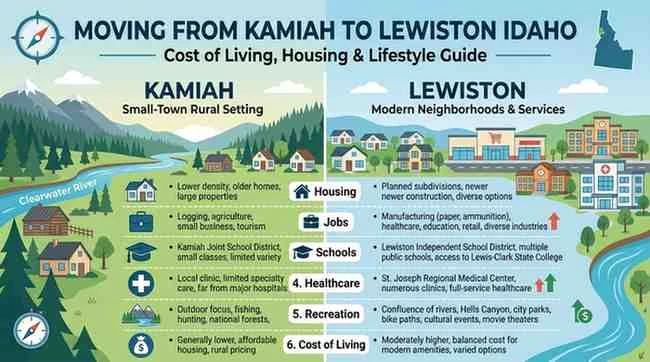
Lewiston provides full-service regional healthcare through St. Joseph Regional Medical Center — the primary hospital serving North Central Idaho — along with a range of specialist clinics, urgent care facilities, dental practices, and outpatient services.
For Kamiah and Clearwater Valley residents who currently travel to Lewiston for any significant healthcare need, living in Lewiston eliminates that travel entirely. The practical healthcare quality-of-life improvement is one of the most frequently cited benefits among Clearwater Valley transplants to Lewiston.
St. Joseph Regional Medical Center provides emergency services, surgical care, cardiac services, oncology, labor and delivery, imaging, and a range of specialty clinics. The healthcare ecosystem around the hospital includes independent specialist practices, physical therapy, behavioral health services, and primary care.
For retirees specifically, proximity to full-service healthcare is often the single most important factor in the relocation decision — and Lewiston delivers on it.
What Outdoor Activities and Recreation Does Lewiston Offer?
Lewiston’s outdoor recreation calendar is defined by the Snake and Clearwater Rivers — two of Idaho’s most storied fisheries converge at the city’s front door, and the valley walls above provide hiking, trail access, and views that few comparably sized cities can match.
Fishing: The Clearwater River below Lewiston is legendary for steelhead and salmon. The Snake River system offers additional salmon, steelhead, and bass fishing. For Kamiah-area residents who already fish these systems, Lewiston puts you at the mouth of the drainage — not hours from it.
Boating and water recreation: Jet boats, fishing boats, and recreational watercraft operate extensively on both rivers throughout the season. Hell’s Canyon — the deepest river gorge in North America — is accessible by jet boat from the Lewiston–Clarkston area.
Hiking: The Lewiston Levee Parkway provides riverside trail access in the valley. The Lewiston Hill area above the city offers steeper terrain and broader views. Natural areas surrounding the valley provide trail access within minutes of the city.
Hunting: Idaho County’s exceptional hunting grounds are still within reasonable reach from Lewiston — the drive is longer than from Kamiah, but the Lewis-Clark Valley itself and the surrounding draws offer upland birds and some deer hunting close to home.
What Challenges Should You Consider Before Moving?
The move from Kamiah to Lewiston brings real benefits, but the transition from small-town rural life to a regional city involves genuine adjustments that are worth understanding before you commit.
| Factor | Kamiah | Lewiston | Consideration |
|---|---|---|---|
| Community size | ~1,300 residents | ~33,000 residents | Adjustment period for social dynamics |
| Traffic | Minimal | Moderate city traffic | Not severe by Idaho standards, but different |
| Housing competition | Limited inventory, less competition | More options, more buyer competition | Pre-approval and preparation matters more |
| Winter severity | Harder winters, more snow | Milder — lower elevation, less accumulation | Typically a positive adjustment |
| Cost of living | Lower overall | Modestly higher | Offset by reduced travel costs and more local access |
| Pace of life | Rural, slower | Small-city cadence | Takes adjustment for some rural residents |
| Community familiarity | Deep, multi-generational ties | Takes more time to build | Social investment required early |
The biggest adjustment is typically the social one — not the cost or the logistics, but the transition from a community where everyone knows everyone to one where you’re starting fresh. Most Clearwater Valley transplants find that Lewiston’s community is genuinely welcoming, but it requires active investment in ways that a small town like Kamiah doesn’t demand.
How Can You Prepare for a Smooth Move from Kamiah to Lewiston?
A well-prepared relocation from Kamiah to Lewiston takes two to four months of lead time — starting with housing and employment planning, working through logistics, and building in flexibility for the timeline variability that Idaho’s housing market creates.
Moving Checklist: Kamiah to Lewiston
3–4 months before:
- [ ] Establish your housing budget and get mortgage pre-approval if buying
- [ ] Research Lewiston neighborhoods against your school, commute, and lifestyle priorities
- [ ] Begin employment transition planning if not already secured
- [ ] Research Lewiston school enrollment requirements if applicable
- [ ] Arrange a storage unit in Kamiah or the Lewiston area to manage the transition gap
6–8 weeks before:
- [ ] Sign purchase agreement or rental lease
- [ ] Schedule utilities disconnection at origin and connection at destination
- [ ] File change of address with USPS; notify financial institutions, insurance providers, and all recurring services
- [ ] Arrange moving truck or moving company for the Kamiah–Lewiston corridor
- [ ] Begin decluttering — the move is the natural reset point for what you’re bringing forward
2–4 weeks before:
- [ ] Pack non-essential rooms first; keep daily-use items accessible until the last week
- [ ] Confirm school enrollment if applicable
- [ ] Transfer Idaho vehicle registration if changing counties
- [ ] Confirm moving storage unit reservation
Move week:
- [ ] Pack essentials bag with medications, documents, chargers, and items needed in the first 24 hours in the new home
- [ ] Do a final walkthrough of the Kamiah property before departure
- [ ] Transfer keys and complete any final property obligations
For the storage side of the Kamiah-to-Lewiston move, Elk Country Storage Co. serves both ends of the corridor — with locations in Kamiah and Kooskia for month-to-month, no-deposit units that bridge the gap between when you leave your Kamiah home and when you’re fully settled in Lewiston. Our complete guide on short-term self storage when moving covers exactly how to use storage to reduce the pressure of a tight moving timeline.
If you’re decluttering before the move — which is always worth doing — the room-by-room decluttering checklist provides a systematic framework for sorting what moves with you, what goes into storage, and what gets left behind.
What Does a Kamiah-to-Lewiston Relocation Actually Look Like?
Consider a realistic scenario: a family of four in Kamiah — two working adults, two school-age children — decides to relocate to Lewiston after one parent is offered a position at a Lewiston healthcare facility. The other parent works remotely and can operate from anywhere.
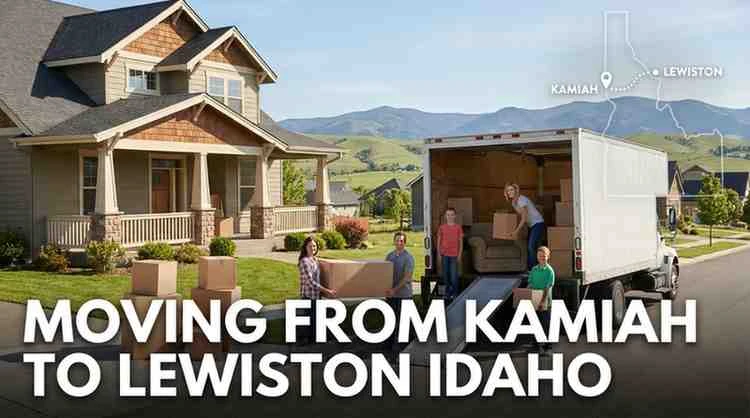
Housing search: They start house hunting three months before the target move date, working with a Lewiston area agent who focuses their search on the Orchards area for school proximity and yard space. After two offers that weren’t accepted, they secure a three-bedroom home on the plateau — newer construction, larger than their Kamiah home, at a purchase price modestly higher but offset by eliminating a long daily commute.
Schools: Their two children enroll in the Orchards-area elementary school and Lewiston Middle School. The transition takes a semester — new friends, new routines, new teachers — but by spring both kids have found their footing.
The move itself: The timing gap between their Kamiah closing date and the Lewiston closing creates a two-week window where their household contents need somewhere to go. A 10×15 unit at Elk Country Storage Co.’s Kamiah location bridges that gap cleanly — no deposit, no contract beyond the two months they actually need.
Outcome: A year into Lewiston, the family reflects that the things they miss about Kamiah — the specific community, the river access right outside town, the familiarity — are real. But the things that drove the move — healthcare proximity for a parent managing a chronic condition, broader school options, and professional opportunity — have delivered what they hoped. They drive back to the Clearwater Valley several times a year. The roots don’t disappear.
Frequently Asked Questions: Moving from Kamiah to Lewiston Idaho
Is Lewiston Idaho a good place to live? For most people making the move from smaller rural communities, yes. Lewiston offers a genuine quality of life combining outdoor recreation, community character, full-service healthcare, employment diversity, and affordable housing relative to larger Idaho cities. The mild climate compared to higher-elevation Idaho communities is an additional benefit many residents didn’t fully anticipate.
How far is Kamiah from Lewiston? Kamiah is approximately 60 miles from Lewiston via US-12, a scenic river highway that runs roughly one hour under normal conditions. It’s a practical commute for some people, but the majority of residents who move to Lewiston are doing so precisely because they want to reduce that distance to zero.
Is Lewiston more affordable than other Idaho cities? Yes, significantly. Lewiston’s housing costs are well below Boise, Coeur d’Alene, and Sun Valley, and modestly above small rural communities like Kamiah. It’s one of Idaho’s more affordable mid-size cities for home purchase and general cost of living.
What jobs are available in Lewiston? Manufacturing (Clearwater Paper and others), healthcare (St. Joseph Regional Medical Center), education (Lewis-Clark State College, Lewiston School District), transportation and logistics, construction, retail, and small business across all service categories.
Are Lewiston schools good? Lewiston Independent School District is a solid public school system with more program variety than rural Idaho districts. Lewiston High School’s AP programs, CTE vocational pathway, and athletics are particularly well-regarded. Lewis-Clark State College provides a local higher education option.
What is the weather like in Lewiston? Lewiston has one of Idaho’s milder climates due to its low-elevation river valley location. Winters are shorter and less severe than Kamiah and most of North Central Idaho. Summers are hot — consistently above 90°F in July and August. The mild winter is often cited as a positive surprise by Clearwater Valley transplants.
What are the best neighborhoods in Lewiston? The Lewiston Orchards area suits families prioritizing newer homes, school proximity, and suburban character. Valley floor neighborhoods near the river suit retirees and those who prefer proximity to downtown and medical facilities. Affordable options exist throughout older established valley-floor neighborhoods.
How much does it cost to move from Kamiah to Lewiston? A local move of approximately 60 miles with a full household load typically runs $1,500–$4,000 with a moving company, depending on home size and services needed. DIY with a rental truck runs significantly less. Storage costs during the transition depend on unit size and duration.
Is Lewiston good for retirees? Very. Lewiston combines mild winters, full healthcare access, outdoor recreation, affordable housing, and a genuine community character that serves retirees well. Many retiring Clearwater Valley residents specifically choose Lewiston for healthcare proximity as their primary motivation.
What should I know before relocating to Lewiston? Understand the community adjustment — Lewiston is friendly but building social connections takes more active effort than in a small town. Get mortgage pre-approval early if buying. Research school zones against your specific address before purchasing. And plan your storage logistics for the transition gap — it almost always takes longer than expected.
Final Thoughts on Moving from Kamiah to Lewiston Idaho
Moving from Kamiah to Lewiston Idaho is one of the more common and sensible within-region relocations in North Central Idaho — and for good reason. Lewiston delivers on the things that most motivate the move: employment opportunity, healthcare proximity, housing variety, educational depth, and the kind of small-city livability that doesn’t require giving up the outdoor culture that made the Clearwater Valley worth staying in for so long.
The transition involves real adjustments — the community dynamics are different, the pace is slightly faster, and the social fabric takes longer to build in a city than in a town of 1,300 people. But the residents who’ve made this move consistently describe it as the right call for their stage of life, even as they hold genuine affection for Kamiah.
If you’re planning the move, prepare early, give the housing search realistic lead time, and don’t underestimate the value of a flexible storage solution during the transition. The logistics are manageable with the right planning — and Elk Country Storage Co. is here to help bridge the gap with month-to-month, no-deposit storage in Kamiah while you get settled in Lewiston.
Share this guide with anyone in the Clearwater Valley considering the same move — and drop a comment with any questions about what life in Lewiston is actually like after the boxes are unpacked.
📞 Elk Country Storage Co.: (208) 630-3753 🌐 Reserve a unit: elkcountrystorageco.com/reserve
Related Resources from Elk Country Storage Co.:
- Short-Term Self Storage When Moving — Using storage to bridge the Kamiah-to-Lewiston transition gap
- Decluttering Before a Move: Room-by-Room Checklist — What to bring, store, and leave behind
- Kamiah Storage Units — Reserve a unit in Kamiah before you leave
- Kooskia Storage Units — Storage along the US-12 corridor
- Month-to-Month Storage — Flexible rental terms for unpredictable moving timelines