
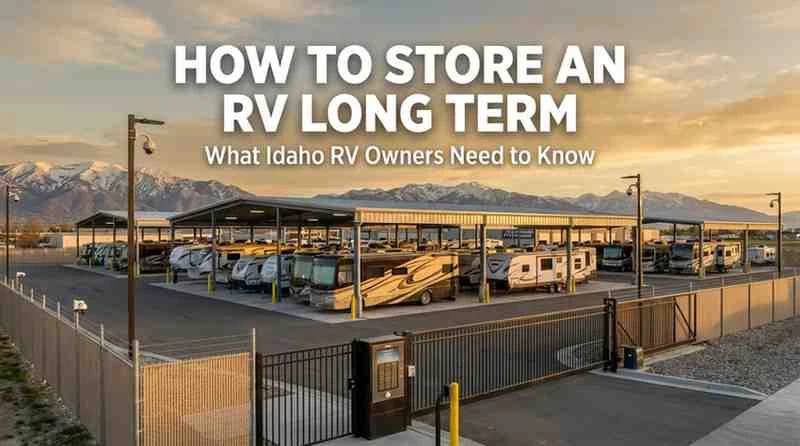
Idaho RV owners face a specific set of challenges when the travel season ends. Clearwater Valley winters bring sustained freezing temperatures, snow accumulation, freeze-thaw moisture cycling, and months of potential UV exposure — and an RV that isn’t properly prepared and stored before all of that arrives is an RV that often needs expensive repairs before it rolls again in spring.
Knowing how to store an RV long term in Idaho is not a single task — it’s a systematic process covering everything from water system draining to battery maintenance, tire protection, pest prevention, and choosing the right storage facility. Get it right, and your RV comes out of storage in spring exactly as it went in. Get it wrong, and you’re dealing with cracked pipes, a destroyed battery, mold in the living space, or worse.
This guide covers the entire long-term storage process from start to finish: what to do before the RV goes away, how to winterize it for Idaho conditions, how to maintain it during storage, what to look for in a storage facility, and a complete checklist you can follow before the doors close for the season.
How to Store an RV Long Term Safely and Effectively?
Long-term RV storage is effective when it combines complete pre-storage preparation, appropriate environmental protection, and periodic maintenance checks throughout the storage period.
The core principles are the same whether you’re storing for one winter or several seasons:
- Remove all threats from inside: water in the plumbing, food in the pantry, battery charge left unmanaged, and moisture trapped in the interior
- Protect from outside threats: weather, UV exposure, pests, and theft
- Choose the right storage environment: indoor, covered, or outdoor — each with specific tradeoffs
- Maintain the RV during storage: monthly checks, battery maintenance, tire pressure monitoring, and quick inspections that catch problems before they grow
The biggest long-term storage mistakes aren’t dramatic — they’re small oversights compounded by months of neglect. A slightly damp interior sealed for winter becomes a mold problem. A battery left in the cold without a maintainer needs replacement before spring. Water left in a single fitting cracks it at the first hard freeze. Systematic preparation prevents all of it.
Why Is Proper RV Storage Important in Idaho?
Idaho’s climate makes proper RV storage non-negotiable — sub-freezing temperatures, snow loads, moisture cycling, and UV exposure all cause measurable damage to RVs stored without adequate preparation.
What Does Idaho Winter Do to an Unprepared RV?
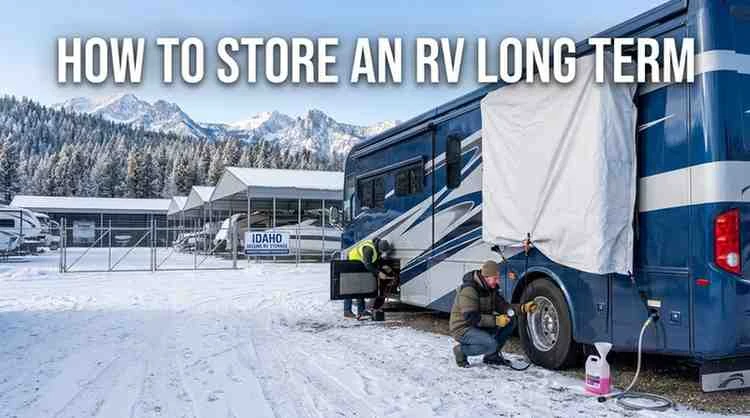
Freezing temperatures are the primary threat. The Clearwater Valley and most of central and northern Idaho regularly drops well below 0°F. Any water remaining in an RV’s freshwater system — tanks, lines, pump, water heater, toilet — freezes, expands, and cracks the containing component. A cracked water heater, burst freshwater line, or damaged pump is an avoidable repair that runs from hundreds to thousands of dollars.
Snow accumulation loads the roof, roof vents, slideout seals, and any unsealed horizontal surfaces with substantial weight. An inadequate cover or no cover at all allows snow to sit on EPDM roofing for months — compressing seals, stressing roof structures, and driving moisture into any seam with even minor existing wear.
Moisture and freeze-thaw cycling are the slow killers. Every time the temperature crosses the freeze threshold, water in tiny gaps expands and contracts — progressively working into seams, delaminating walls, softening floor decking, and feeding mold inside the living space if any interior moisture was left behind.
UV exposure during storage is underestimated. Even in winter, UV radiation degrades rubber seals, EPDM roofing, exterior graphics, and any uncovered plastic components. An RV stored outdoors for several seasons without UV protection ages measurably faster than one stored under cover or indoors.
What Should You Do Before Putting an RV Into Long-Term Storage?
Pre-storage preparation is the phase that determines everything about the condition your RV is in when you retrieve it. It should be completed before the first hard freeze — in Idaho’s Clearwater Valley, target mid-October at the latest.
How Should You Clean the RV?
Clean the entire RV — interior and exterior — before storage, not after.
Dirt, food residue, and organic material left on surfaces during months of storage create conditions for mold growth, attract pests, and cause staining that is significantly harder to remove after sitting. Cleaning before storage is always more effective and far less work than cleaning a mold-damaged, pest-visited RV in spring.
Exterior:
- Wash the RV with an appropriate RV-safe cleaner — not dish soap or household detergents, which degrade sealants
- Inspect the roof, seams, slideout seals, and window frames for cracks or gaps — address any sealant failures before storage
- Apply a UV-protective wax or RV protectant to fiberglass, painted surfaces, and any exposed plastic
- Clean and treat all rubber seals and weather stripping with a rubber conditioner
Interior:
- Remove all food, beverages, and anything that can attract pests
- Vacuum carpets and upholstery thoroughly; wipe all surfaces with a mildew-resistant cleaner
- Clean the refrigerator completely, defrost if applicable, and leave the door propped open during storage
- Empty and clean the toilet black tank completely
- Leave all interior cabinet and closet doors slightly open for airflow
How Do You Empty Water Systems?
Drain every water-containing system in the RV completely — freshwater tank, water heater, all supply lines, pump, gray tank, and black tank.
The procedure for a thorough freshwater system drain:
- Turn off the water heater and allow it to cool before draining
- Open all faucets — hot and cold — at every sink, shower, and external shower
- Open the low-point drain valves (typically located on the underside of the RV) to drain supply lines
- Drain the freshwater tank completely via its drain fitting
- Drain the water heater via the drain plug — with the pressure relief valve open to allow air in
- Use compressed air to blow out any remaining water in the lines
- Pour propylene glycol marine-grade RV antifreeze into the drain traps under each sink and into the toilet to protect the P-traps from freeze damage
- Drain the black and gray tanks completely at an appropriate dump station before storage
Why Is Winterization Necessary?
Winterization is necessary because even a small amount of water left in any part of the plumbing system will freeze in Idaho’s temperatures — and freezing water expands with enough force to crack pipes, fittings, tanks, and pump housings that cost significantly more to repair than the winterization procedure costs to complete.
Propylene glycol RV antifreeze (pink antifreeze, non-toxic) is used to fill the P-traps, toilet bowl, and any plumbing segments that can’t be fully drained by gravity. It is not the same as automotive antifreeze and is safe for use in water systems. Use only antifreeze specifically labeled for RV/marine potable water systems.
How Should You Protect the Interior?
Interior protection during long-term storage focuses on three things: preventing moisture accumulation, blocking pest entry, and preserving soft surfaces and materials.
- Place moisture absorbers (calcium chloride or desiccant products) in the bedroom, living area, bathroom, and any enclosed storage compartments
- Cover upholstered furniture and mattresses with breathable fabric covers — not plastic, which traps moisture
- Close all window blinds or curtains to reduce UV exposure on interior fabrics and surfaces
- Seal all exterior openings: cover the furnace exhaust vent, refrigerator vent, and any other exterior openings with mesh or purpose-made covers to prevent pest entry
- Leave interior doors and cabinet doors open to allow airflow
What Maintenance Tasks Should Be Completed First?
Before storage is the right time for maintenance that protects the RV during downtime:
- Roof inspection: Walk the roof and inspect every seam, vent base, and penetration for cracks in sealant — reseal any areas showing wear
- Slide-out seal treatment: Clean and treat all slide-out seals with a slide-out rubber conditioner
- Brake inspection: If the RV has been in regular use, check brake pads and drums before a season of storage when corrosion can develop
- Tire inspection: Check for sidewall cracking, tread wear, and proper inflation — address before storage
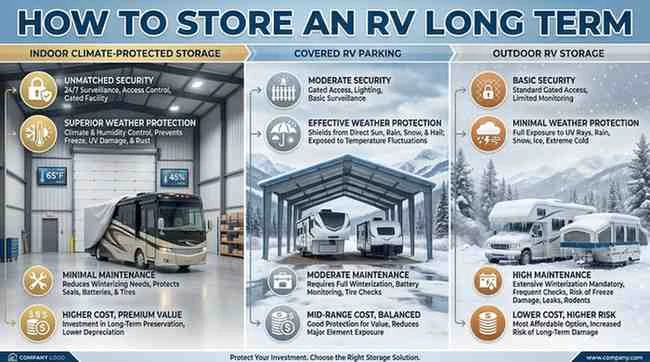
Should You Choose Indoor, Covered, or Outdoor RV Storage?
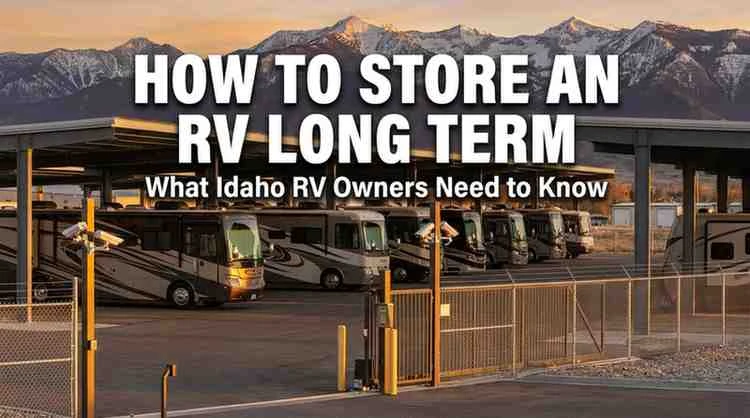
For Idaho’s climate, indoor or covered storage is the recommended choice for any RV owner who wants maximum long-term protection. The combination of snow loads, UV exposure, and freeze-thaw moisture cycling makes unprotected outdoor storage a measurably higher-risk option over multiple seasons.
| Storage Type | Advantages | Disadvantages |
|---|---|---|
| Indoor Storage | Maximum protection from weather, UV, pests, and theft; ideal for long-term preservation of high-value RVs | Highest cost; availability limited in smaller markets; size restrictions for very large rigs |
| Covered Storage | Roof protection from snow and direct rain; UV protection from above; good airflow; typically more affordable than fully enclosed | Open sides allow wind-driven moisture and some weather exposure; less security than fully enclosed |
| Outdoor Storage | Lowest cost; typically most widely available; few size restrictions | Maximum weather exposure; UV degradation; snow load risk; highest pest access risk; requires quality cover |
For most Idaho RV owners, covered storage with a quality RV cover is a practical and cost-effective solution that meaningfully reduces the risks of outdoor storage without the full cost of indoor. For higher-value motorhomes and fifth wheels, fully enclosed indoor storage is the better long-term investment.
Elk Country Storage Co. offers vehicle storage at both Kamiah and Kooskia locations, with unit bays up to 10×30 sized for most recreational vehicles and travel trailers. Rentals are available on a month-to-month basis with no deposit required — so you pay only for the months your RV is actually in storage.
How Can You Protect an RV From Idaho’s Winter Weather?
Protection from Idaho winter weather requires addressing five specific environmental threats: snow load, ice, moisture infiltration, UV radiation, and wind-driven debris.
Snow
A quality, purpose-built RV cover with a reinforced roof panel is the minimum. For outdoor storage specifically, a cover with heavy-duty denier rating and reinforced attachment points prevents sagging and collapse under snow accumulation. If the RV is stored in a covered facility, a lighter cover used primarily for dust and UV protection is sufficient.
Consider using telescoping roof support poles inside larger RVs to prevent roof flex under snow load if the RV is stored outdoors in a high-snowfall area.
Ice
Ice forms in any standing water and any gap where moisture can accumulate. The water system draining and antifreeze procedures above prevent freeze damage to plumbing. For the exterior, RV slide-out seals conditioned before storage are more resistant to ice bonding and tearing during cold snaps.
Moisture
Exterior sealant maintenance before storage prevents moisture from entering through seams. Interior moisture absorbers and ventilation prevent condensation from accumulating inside. A cover with ventilation — or a slightly open roof vent with a vent cover — allows moisture vapor to escape rather than condensing on interior surfaces.
UV Exposure
Even in winter, UV degrades uncovered exterior surfaces over months of storage. A quality UV-protective cover or enclosed storage eliminates this entirely. At minimum, apply an RV-appropriate UV protectant to fiberglass, rubber, and plastic surfaces before storage.
Wind
Wind-driven storage covers are an underappreciated problem — a shifting cover abrades the RV’s paint and graphics more than no cover at all. Use a cover with full attachment straps, belly bands, and tie-down loops, and check tension after the first major windstorm of the season.
How Do You Maintain an RV While It Is in Storage?
A stored RV is not a passive object — it needs periodic attention during storage to prevent small issues from compounding into significant problems over months.
Battery Care
Disconnect the house batteries from the RV’s 12V system to prevent parasitic drain from phantom loads — clocks, CO detectors, and other always-on systems will discharge batteries over weeks if not disconnected. Connect house batteries to a quality smart battery maintainer (not a simple trickle charger) that monitors charge level and maintains without overcharging.
For winterized RVs stored in locations where temperatures will drop below freezing, keep batteries in a location that stays above freezing — a conditioned indoor space is preferable to an unheated storage bay for battery health.
Tire Maintenance
Flat-spotting — a permanent deformation of tire sidewalls — occurs when an RV sits stationary on the same contact patch for months, especially in cold temperatures that harden the rubber. Prevention:
- Inflate tires to the maximum recommended cold pressure before storage
- Place tires on flat boards or purpose-made tire cradles to distribute the contact patch
- Apply a UV-protective tire dressing and cover tires with UV-blocking tire covers if stored outdoors
- Move the RV forward or backward by a few feet once a month if possible to rotate the contact patch
Pest Prevention
Rodents seek warm, enclosed spaces in fall — and an RV is an ideal habitat. Prevention is significantly easier than remediation:
- Place expanding foam or steel wool in any gap around plumbing penetrations, wire bundles, and other entry points
- Use purpose-made RV rodent repellent products (peppermint oil-based, ultrasonic devices, or bait stations placed outside the RV)
- Check entry points monthly during storage — new gaps can appear as the RV settles or seals age
Routine Inspections
At minimum, visit your stored RV once per month to:
- Check tire pressure and look for sidewall changes
- Inspect for signs of pest activity — droppings, nesting material, chewed items
- Look for any water stains indicating a new leak
- Check that moisture absorbers haven’t reached capacity
- Verify the battery maintainer is functioning
What Are the Most Common Long-Term RV Storage Mistakes?
| Mistake | Potential Consequence | Prevention |
|---|---|---|
| Skipping water system winterization | Cracked pipes, fittings, tanks, and pump; costly plumbing repairs | Drain all systems completely; flush with RV antifreeze |
| Leaving batteries installed without a maintainer | Dead or frozen battery; replacement required before spring | Disconnect or connect to a smart battery maintainer |
| Storing with moisture inside the living space | Mold, mildew, odor, upholstery damage | Clean thoroughly before storage; use moisture absorbers; ensure ventilation |
| Using the wrong cover or no cover | UV degradation, water infiltration, graphic damage, abrasion | Use a purpose-built, properly fitted RV cover with ventilation |
| Ignoring tire maintenance | Flat-spotting, sidewall cracking, tire failure at first spring drive | Inflate to max cold pressure; use tire cradles; add UV covers |
| Skipping the roof and sealant inspection | Water infiltration, delamination, interior water damage | Inspect and reseal all roof seams and penetrations before storage |
| Not addressing pest prevention | Rodent nesting, chewed wiring, insulation damage, health risks | Seal entry points, use repellents, check monthly |
| Choosing an unsecured storage location | Theft, vandalism, unauthorized access | Select a facility with gated, keypad-controlled access |
What Features Should You Look for in an RV Storage Facility?
The right RV storage facility combines physical security, appropriate shelter, accessible access policies, and unit sizes that actually fit your rig.
Security: Perimeter fencing with keypad-controlled gate access is the baseline. You want to know that only authorized renters can enter the facility. Lighting in drive aisles matters for early morning and evening access.
24/7 access: RV owners often need to retrieve gear, perform checks, or prepare for a trip on schedules that don’t conform to office hours. A facility with 24/7 gate access removes that constraint entirely.
Unit or bay sizing: Class A motorhomes, fifth wheels, and large travel trailers with slides extended can exceed 45 feet in total length. Confirm that the facility has bays long enough for your specific rig before reserving. At Elk Country Storage Co., bays up to 10×30 are available — appropriate for most standard recreational vehicles.
Storage type options: Having the choice between outdoor, covered, and enclosed indoor storage allows you to match the protection level to your rig’s value and your budget.
Rental flexibility: Long-term storage doesn’t always mean exactly the same number of months every year. A month-to-month storage arrangement with no minimum commitment means you pay for the actual months of storage, not a fixed annual lease.
No deposit: Getting a storage rental started at the end of the travel season — when you may also be managing other maintenance and preparation costs — is easier without a large deposit. Elk Country Storage Co. requires no deposit to begin a rental.
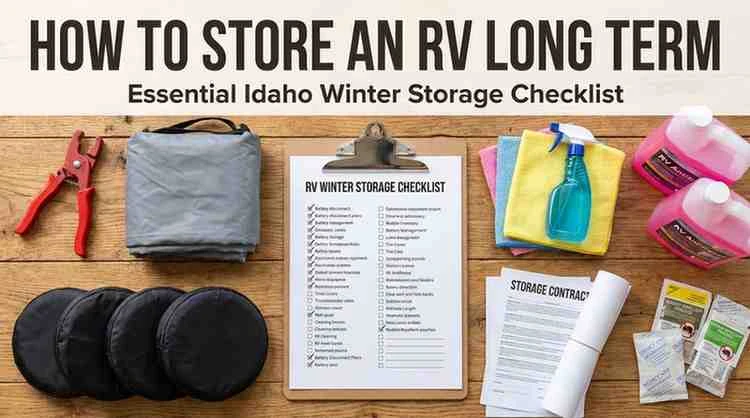
What Is the Ultimate Long-Term RV Storage Checklist?
Work through this checklist before your RV goes into long-term storage in Idaho:
Cleaning
- Wash exterior with RV-safe cleaner; apply UV-protective wax or protectant
- Inspect and reseal roof seams, window frames, and all penetrations
- Treat all rubber seals and weather stripping with conditioner
- Clean interior thoroughly — vacuum upholstery, wipe all surfaces, remove all food
- Clean and defrost refrigerator; prop door open for storage
- Drain and clean black tank completely
Water System Winterization 7. Turn off and cool water heater; drain via drain plug 8. Open all faucets; open low-point drain valves 9. Drain freshwater tank 10. Blow out lines with compressed air 11. Pour RV antifreeze (propylene glycol) into all P-traps and toilet bowl 12. Remove and drain water filter cartridges
Maintenance Before Storage 13. Change engine oil and filter (motorhomes) 14. Check brake condition; note any items for spring service 15. Inspect slide-out seals; treat with conditioner 16. Inspect and clean awning; retract and secure for storage
Battery and Electrical 17. Disconnect house batteries from the 12V system 18. Fully charge house batteries 19. Connect to a smart battery maintainer rated for the battery bank size 20. Remove or cover the chassis battery maintainer if the motorhome will be in a location with power access
Tires 21. Inflate to maximum recommended cold pressure 22. Place on tire cradles or boards 23. Apply UV-protective tire dressing 24. Cover with UV tire covers if stored outdoors
Pest and Moisture Prevention 25. Seal all exterior penetrations and gaps with steel wool or expanding foam 26. Place RV rodent repellent products around the exterior perimeter 27. Place moisture absorbers in bedroom, living area, bathroom, and all enclosed compartments 28. Leave all interior cabinet and closet doors open for airflow
Cover and Security 29. Apply fitted RV cover with proper attachment and ventilation, or arrange covered/indoor storage 30. Confirm gate access code for the storage facility 31. Photograph the RV interior and exterior for insurance documentation 32. Note the storage address, unit number, and contact for the facility
What Does Long-Term RV Storage Look Like for a Clearwater Valley Owner?
Consider a realistic scenario: a Kamiah-area couple owns a 32-foot fifth wheel they use from April through October — camping in the Clearwater Valley drainages, exploring central Idaho, and making an annual trip to the coast. When October ends, the rig needs somewhere to go for five to six months.
The challenge: Their property has limited flat space, and leaving the fifth wheel on the gravel driveway means snow accumulation on the roof, limited security, and no environmental protection through an Idaho winter.
Preparation: In early October, they work through the complete checklist. The water heater is drained, all lines blown out with a compressor, and RV antifreeze flushed through the system. The refrigerator is cleaned and left open. All food and loose gear is removed. House batteries are disconnected and put on a smart maintainer in the garage. Roof seams are inspected — one area near the front AC unit shows cracking sealant, which is addressed before storage.
Storage selection: They reserve a covered bay at a Clearwater Valley storage facility — large enough for the fifth wheel with the hitch, with 24/7 keypad access and month-to-month rental terms. No deposit was required, making the reservation easy to place in the same week they finished winterization.
During storage: One visit per month to check tire pressure, look for pest signs, and confirm the moisture absorbers haven’t reached capacity. A brief visual check of the exterior during each visit.
Spring outcome: In early April, the fifth wheel is retrieved in the same condition it was stored. The battery maintainer has kept the house batteries at full capacity. The one repaired roof seam shows no water intrusion. The rig is road-ready within an afternoon of de-winterizing.
The key lesson: preparation done in October takes three to four hours and prevents multiple potential spring repairs. The storage facility provides the protection the driveway couldn’t.
For RV owners across the Clearwater Valley, Elk Country Storage Co.’s vehicle storage options in Kamiah and Kooskia — with bays up to 10×30, 24/7 gate access, and no deposit required — provide exactly this kind of practical long-term storage solution. The storage unit size guide can help confirm what bay size fits your specific rig before you reserve.
Frequently Asked Questions About Long-Term RV Storage
How long can an RV remain in storage? A properly winterized and prepared RV can remain in long-term storage indefinitely. Most Idaho owners store for five to seven months between October and April. Monthly maintenance checks and annual inspections before returning to service keep long-term storage from causing preventable problems.
How often should I check on my stored RV? At minimum, once per month. Monthly checks should cover tire pressure, pest activity, moisture absorber saturation, battery maintainer function, and a quick exterior look for any new damage or cover shifting.
Is indoor RV storage worth the cost? For high-value motorhomes and fifth wheels, yes. The protection against snow load damage, UV degradation, moisture cycling, and theft that indoor storage provides typically costs less over a multi-year period than the repairs those threats cause in outdoor storage. For lower-value or older units, covered storage is a cost-effective middle ground.
Should I disconnect my RV battery? Disconnect the house batteries from the RV’s 12V system to prevent parasitic drain, but connect them to a smart battery maintainer. Batteries left fully discharged in freezing temperatures can freeze and are permanently damaged. Disconnect from the RV — not from the maintainer.
How do I prevent rodents from entering my RV? Seal all exterior penetrations and gaps with steel wool, expanding foam, or mesh. Use rodent repellent products around the perimeter. Remove all food from the interior. Check monthly for signs of entry. Outdoor-stored RVs are at higher risk than those in enclosed or well-maintained indoor facilities.
Can snow damage an RV? Yes. Snow accumulation on RV roofs adds substantial weight that stresses roof structures, compresses seals, and can cause damage at attachment points for roof-mounted equipment. An appropriate cover, covered storage, or indoor storage prevents direct snow accumulation.
What is the best RV cover for winter storage? A purpose-built, model-specific or size-appropriate polypropylene cover with a reinforced roof panel, full belly straps, UV resistance, and integrated ventilation panels. Generic tarps are not appropriate — they trap moisture, abrade surfaces, and fail to shed snow properly.
Should I store my RV with a full fuel tank? For motorhomes: fill the tank and add fuel stabilizer, then run the engine briefly to circulate the treated fuel. A full tank minimizes the air space in which condensation can form and introduce water into the fuel. For tow vehicles used to haul fifth wheels or trailers, the same applies.
How do I prepare my plumbing system for winter? Drain all tanks and lines completely, blow out lines with compressed air, and then flush P-traps and the toilet with propylene glycol RV antifreeze. Do not use automotive antifreeze — it is toxic and inappropriate for potable water systems.
What is the safest way to store an RV long term? Complete the full pre-storage preparation checklist, store in an indoor or covered facility with gated, 24/7 access, use a quality RV cover even indoors for dust and pest protection, maintain the battery with a smart maintainer, and perform monthly checks during the storage period. The combination of thorough preparation and appropriate storage conditions produces consistently good long-term outcomes.
Final Thoughts on How to Store an RV Long Term
Knowing how to store an RV long term in Idaho is one of the most practical skills an RV owner in this state can develop — and the return on investment is direct and measurable. A few hours of preparation in October prevents multiple potential spring repairs, protects a significant financial investment, and ensures that the first day of the new travel season is a launch, not a troubleshooting session.
The process isn’t complicated, but it requires completeness. Partial winterization is nearly as risky as none at all. A single missed water line, an uncharged battery, an uninspected roof seam — any of these can become an expensive problem over five months of Idaho winter. The checklist above addresses all of it.
For Clearwater Valley RV owners who want secure, accessible, flexible off-season storage, Elk Country Storage Co. offers vehicle storage at Kamiah and Kooskia with the rental terms that make long-term storage practical: month-to-month, no deposit, and 24/7 access when you need it.
If this guide helped you plan your RV’s winter storage, share it with a fellow owner heading into their first Idaho winter — and reach out with any questions about storage options in the Clearwater Valley.
📞 Call or text: (208) 630-3753 📧 Email: elkcountrystorageco@gmail.com 🌐 Reserve storage: elkcountrystorageco.com/reserve
Kamiah: 303 Locust Rd, Kamiah, ID 83536 Kooskia: 4689 Hwy 13 South, Kooskia, ID 83539
Related Resources from Elk Country Storage Co.:
- Vehicle Storage — Secure bays for RVs, motorhomes, fifth wheels, and trailers
- Month-to-Month Storage — Flexible seasonal rental terms with no long-term contract
- No-Deposit Storage — Start your RV storage rental without upfront costs
- Storage Unit Size Guide — Confirm the right bay size for your specific rig
- How to Store a Boat for Winter in Idaho — Companion guide for watercraft owners