
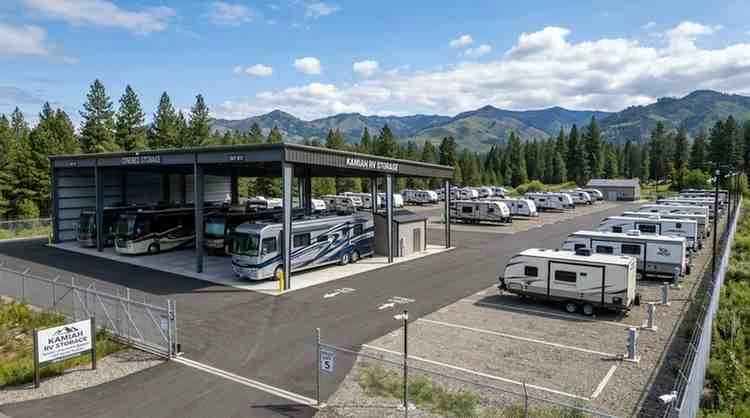
Kamiah sits in the heart of the Clearwater Valley, surrounded by some of the most remarkable outdoor recreation country in the Pacific Northwest. The Clearwater River runs through town. The Selway-Bitterroot Wilderness is an hour away. Elk, deer, and whitetail draw hunters every fall. The fishing draws anglers from across the region every spring and summer. And the camping, the rafting, the riding — it all means that Kamiah residents tend to own more recreational vehicles per household than just about anywhere in Idaho.
That also means storage is a genuine, year-round challenge. A motorhome or travel trailer sitting in the driveway through a central Idaho winter takes up space, collects damage, and often creates friction with neighbors or HOA restrictions. RV storage in Kamiah solves all of that cleanly — protecting your investment, freeing up your property, and keeping your vehicle ready for the next season.
This guide covers everything RV owners in Kamiah and the surrounding Clearwater Valley need to know: the types of storage available, how to choose the right facility, how to prepare your RV for seasonal or long-term storage, and what to look for to get the best value.
What Are the Benefits of RV Storage in Kamiah?
The core benefit of RV storage in Kamiah is straightforward: it protects a significant financial investment during the months it isn’t being used, and it removes a large vehicle from a space where it doesn’t need to be.
Why Do RV Owners Need Seasonal Storage?
RV ownership in the Clearwater Valley follows a clear seasonal pattern. Camping season runs roughly from late spring through early fall. Hunting season extends that window into November for many owners. After that, months of Idaho winter sit between the last use of the season and the next.
During those off-season months, an RV stored at home is exposed to the elements, sitting idle, accumulating weather damage, and occupying space that could be used for other purposes. A secure storage facility removes all of that friction — the vehicle is protected, off your property, and waiting for you when you need it again.
How Does RV Storage Protect Your Investment?
A quality motorhome, fifth wheel, or travel trailer represents a substantial investment — often tens of thousands of dollars, sometimes significantly more. Proper storage during the off-season protects that investment in concrete ways.
UV exposure degrades exterior finishes, sealants, and rubber components. Moisture intrusion causes mold, rot, and structural damage. Freeze-thaw cycles crack hoses, damage tanks, and compromise seals. Rodents move into unoccupied vehicles left outdoors. A secure, well-managed storage facility addresses all of these risks by keeping the vehicle off the ground (or under cover), in a protected environment, and away from the opportunistic damage that comes with leaving a large vehicle unattended on a residential property through winter.
Is RV Storage Better Than Storing an RV at Home?
For most Kamiah residents, yes — for several practical reasons. Home storage of a large RV or motorhome requires adequate space that many residential properties simply don’t offer cleanly. It can create issues with neighbors, municipal regulations, or subdivision rules. And it leaves the vehicle exposed to all the same weather risks without the management oversight a proper facility provides.
A dedicated storage facility also reduces liability. If a stored vehicle at home is damaged in a storm, falls on something, or becomes a target for theft or vandalism, the homeowner bears that responsibility. A properly operated storage facility manages the site, which removes that burden from you.
What Types of RV Storage Are Available in Kamiah?
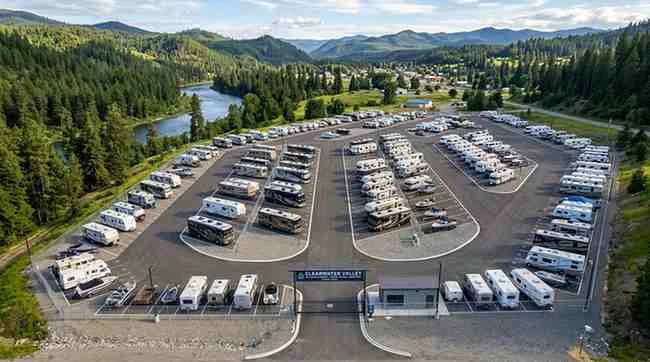
RV storage options in Kamiah range from basic outdoor parking to covered and enclosed configurations. The right choice depends on the size of your vehicle, how long you’re storing it, your budget, and how much protection you want.
What Is Outdoor RV Storage?
Outdoor RV storage is the most common and most accessible option. It provides a designated, secured parking space for your vehicle — typically within a fenced or gated facility. The vehicle is exposed to the elements but is off your property and in a managed, secure environment.
For most standard RVs and travel trailers stored during a typical Idaho off-season, outdoor storage with proper winterization is adequate and cost-effective. The key is pairing outdoor storage with thorough preparation before the vehicle goes in.
What Are the Benefits of Covered RV Storage?
Covered RV storage adds a roof structure above the vehicle, protecting it from direct precipitation, UV radiation, and accumulating snow load. This extends the life of your roof seals, exterior finish, and any roof-mounted equipment like solar panels or A/C units.
If your RV is particularly valuable, relatively new, or has a roof or exterior that you want to maintain in prime condition, the additional cost of covered storage is typically justified by the protection it provides over multiple seasons of use.
When Should You Choose Long-Term RV Storage?
Long-term RV storage — typically defined as three months or more — is the right choice for the Idaho off-season. If you’re done using your RV by October or November and won’t be back in it until April or May, that’s a five- to six-month window where proper long-term storage is the most cost-effective and protection-conscious option.
Long-term storage also makes sense for owners who are temporarily not using their vehicle due to health, travel, or other life circumstances, and for those selling an RV who need a secure location to keep it during the sale process.
Is Short-Term RV Storage a Good Option?
Short-term storage works well during transitional periods — between trips when you don’t want the vehicle at home, while staging a property for sale, or during a period when home storage isn’t practical for logistical reasons. Month-to-month rental terms make short-term storage flexible and low-commitment, which is particularly valuable when your timeline isn’t predictable.
How Do You Choose the Best RV Storage Facility in Kamiah?
Choosing the right RV storage facility in Kamiah comes down to a combination of security, access, location, and the practical details that affect your experience every time you need to retrieve or return your vehicle.
What Security Features Should You Look For?
At a minimum, look for perimeter fencing, controlled access to the storage area, and a facility that is actively managed. A well-maintained property — clearly marked, clean, with functioning lighting and intact fencing — signals that the facility takes its responsibilities seriously.
For your own records, photograph your vehicle at check-in and document its condition. Keep a copy of your rental agreement and any inventory of items stored in or with the vehicle. This protects you in the unlikely event of a dispute.
Why Does Gated Access Matter?
Gated access limits who can enter the storage property, which directly reduces the risk of theft and vandalism. A facility open to anyone at any time is not meaningfully more secure than storing the vehicle in an unlocked lot. Controlled access — whether through a keypad, code, or staffed entry point — means only authorized users can reach the vehicles inside.
How Important Is Location and Accessibility?
Location matters primarily in terms of how convenient it is to retrieve your vehicle when you want it and return it after a trip. A facility close to Kamiah that sits on a route you already travel is meaningfully more convenient than one that requires a detour. Wide access lanes and adequate turning radius for large vehicles are essential — confirm these before reserving, particularly for larger motorhomes or vehicles towing trailers.
What Amenities Should RV Owners Compare?
Beyond security and location, compare:
- Availability of covered vs. outdoor spaces
- Space dimensions and clearance heights
- Surface type (gravel, paved, or packed earth)
- Access hours
- Online reservation and bill pay availability
- Month-to-month lease flexibility
- Whether the facility can accommodate slide-outs or roof-mounted equipment
How Much Does RV Storage Cost in Kamiah, Idaho?
RV storage pricing in Kamiah depends on several factors. Providing an exact monthly figure without knowing current availability and configuration isn’t accurate — contact Elk Country Storage Co. directly at (208) 630-3753 or reserve online for current pricing.
What drives cost, however, is consistent across facilities:
| Pricing Factor | Impact on Cost |
|---|---|
| Vehicle size (length and height) | Larger vehicles require more space and cost more |
| Storage type (outdoor vs. covered) | Covered adds a premium over outdoor |
| Rental term (short-term vs. long-term) | Longer commitments may offer better monthly rates |
| Location and demand | Higher-demand areas or seasons may affect availability |
| Amenities included | Facilities with additional services may price accordingly |
What Factors Affect RV Storage Pricing?
The two primary factors are vehicle size and storage type. A compact travel trailer and a 40-foot Class A motorhome require very different spaces and are priced accordingly. Beyond that, covered storage commands a higher rate than outdoor, and facilities with stronger security, more amenities, or better locations typically price slightly higher to reflect that value.
Does RV Size Impact Storage Costs?
Directly. Storage spaces are priced based on the square footage they occupy. A small pop-up camper takes up minimal space; a large fifth wheel or motorhome with slide-outs requires a significantly larger footprint. Always provide your vehicle’s full length, height, and width — including mirrors and any roof-mounted equipment — when requesting a storage space to ensure the assigned spot actually accommodates your vehicle.
Is Covered Storage Worth the Extra Cost?
For most RV owners who plan to store their vehicle for a full Idaho off-season, yes. The cost difference between outdoor and covered storage is modest on a per-month basis. The cost of repairing UV-degraded sealants, replacing a roof membrane damaged by snow load, or addressing the rust and finish deterioration that comes from months of uncovered outdoor exposure is substantially higher. Over the life of an RV, covered storage typically pays for itself.
Can You Store Boats, Campers, and Other Vehicles in Kamiah?
Elk Country Storage Co. serves the full range of recreational vehicle and vehicle storage needs for Kamiah residents and the broader Clearwater Valley community.
Is Boat and RV Storage Available?
Yes. Boat storage near Kamiah is available for the off-season months when the Clearwater and Snake Rivers are not being actively fished or boated. Storing your boat properly through winter protects the hull, motor, trailer, and all associated equipment from weather damage and theft. For a detailed guide to protecting a boat through an Idaho winter, the complete walkthrough on how to store a boat for winter in Idaho covers the preparation process step by step.
Can You Store Travel Trailers and Fifth Wheels?
Yes. Travel trailers and fifth wheels are among the most commonly stored vehicles at facilities in the Kamiah area. Both require adequate space — particularly fifth wheels, which have a distinctive height profile and may require extra vertical clearance. Confirm dimensions with the facility before reserving.
What Vehicle Storage Options Are Available?
Beyond RVs and boats, vehicle storage at Elk Country Storage Co. includes space for ATVs, motorcycles, utility trailers, and extra vehicles. For the full picture of vehicle storage options available in Kamiah, the vehicle storage page covers what’s available and how to reserve.
How Do You Prepare an RV for Long-Term Storage?
Proper preparation before your RV goes into storage is as important as the facility itself. An RV stored without adequate preparation can accumulate significant damage during an off-season even in a secure, covered space.
How Should You Winterize an RV?
Winterizing an RV means removing water from the plumbing system before freezing temperatures arrive. This includes:
- Draining the fresh water tank completely
- Draining and bypassing the water heater
- Opening all low-point drains to clear water from lines
- Using compressed air or RV antifreeze to purge remaining water from pipes and fixtures
- Draining and treating the black and grey holding tanks
- Closing all exterior vents and protecting them from pest intrusion
Winterization should be completed before the first hard freeze — in central Idaho, that typically means October at the latest for most years.
How Do You Protect Tires and Batteries?
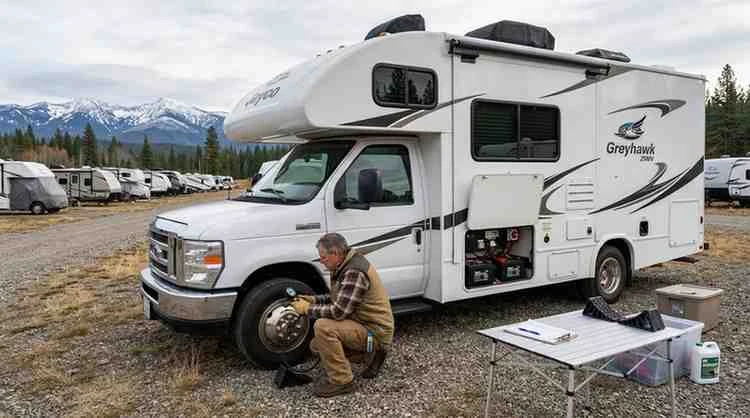
Tires left under the weight of a stationary vehicle for months develop flat spots. Use tire covers to protect against UV degradation, and if possible, place boards under the tires to reduce ground contact. Inflating tires to the upper end of the recommended range before storage also helps maintain shape.
Batteries discharge over time when not in use. Either disconnect the battery and store it somewhere dry and above freezing, or connect a battery maintainer (trickle charger) to keep it at an appropriate charge level through storage.
What Maintenance Should Be Completed Before Storage?
Work through this checklist before handing your RV over to storage:
- Exterior: Wash and dry thoroughly. Apply a UV-protective wax or sealant to the roof and sides. Inspect and reseal any cracked caulking around windows, vents, and seams.
- Interior: Remove all food, beverages, and anything perishable. Clean thoroughly to eliminate odors and pest attractants. Leave cabinet doors slightly open to promote air circulation.
- Slide-outs: Retract completely, lubricate the slide mechanism, and inspect seals.
- Propane: Turn off propane at the tank. If storing long-term, consider removing cylinders entirely and storing them separately.
- Engine/generator: Run the engine and generator to full operating temperature before storage. Add a fuel stabilizer to gasoline in the generator and any fuel-powered systems.
- Roof: Inspect all roof penetrations, vents, and the membrane itself for cracks or separations. Address any issues before storage — a small leak becomes a significant problem after months of exposure.
For a more detailed guide to long-term RV care, the comprehensive guide to how to store an RV long term covers every step of the process in depth.
What Are the Best RV Storage Tips for Kamiah Residents?
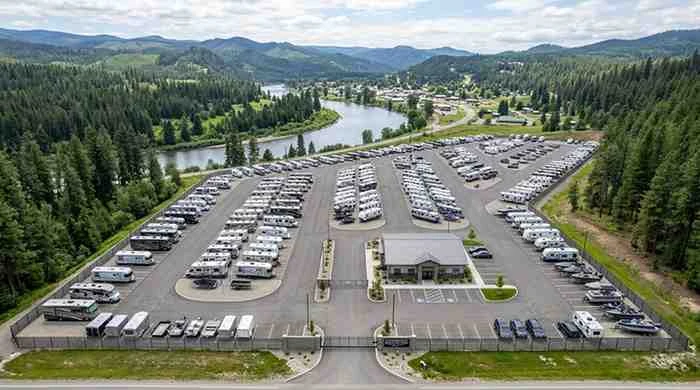
Beyond formal preparation, a few practical habits make RV storage in Kamiah more effective and extend the life of your vehicle significantly.
Start preparation early. Don’t wait for the first frost to begin winterization. Work through your checklist in late September or early October, before the weather turns.
Document the vehicle’s condition at storage. Take photographs of all four sides, the roof, and the interior before moving in. This creates a baseline that protects you in any dispute about pre-existing damage.
Use a breathable cover even in covered storage. A breathable RV cover adds an additional layer of protection against dust, bird droppings, and minor weather intrusion without trapping moisture against the surface.
Check on the vehicle periodically. Even in a secure facility, an occasional walk-around during storage lets you catch developing issues — a slow tire leak, a pest intrusion, or a minor seal failure — before they become expensive.
Avoid common mistakes:
- Skipping winterization because the winter seems mild
- Leaving food or scented products inside that attract rodents
- Ignoring tire maintenance during storage
- Using a non-breathable cover that traps moisture
- Failing to stabilize fuel in the generator before a long storage period
Frequently Asked Questions About RV Storage in Kamiah
Where can I store my RV in Kamiah, ID? Elk Country Storage Co. offers secure RV storage in Kamiah at 303 Locust Rd, Kamiah, ID 83536. Reserve online or call (208) 630-3753 for availability.
How much does RV storage cost in Kamiah, Idaho? Pricing depends on vehicle size, storage type, and rental term. Contact Elk Country Storage Co. at (208) 630-3753 or check availability online for current rates.
Is covered RV storage available in Kamiah? Contact the facility directly to confirm current covered storage availability. Space configurations change with demand, and it’s worth asking specifically about covered options for your vehicle.
How do I winterize my RV before storage in Idaho? Drain all water systems, bypass the water heater, purge lines with compressed air or RV antifreeze, treat holding tanks, protect tires and batteries, and inspect the roof and all exterior seals. Complete winterization before the first hard freeze — typically by October in central Idaho.
Can I store my boat along with my RV in Kamiah? Yes. Elk Country Storage Co. accommodates boats alongside RVs and other recreational vehicles. Confirm space availability and dimensions for your specific boat and trailer.
Is month-to-month RV storage available in Kamiah? Yes. Month-to-month rental terms are available, giving you flexibility to store for the season without committing to a long-term contract.
What is the largest RV that can be stored in Kamiah? Contact the facility with your vehicle’s full dimensions — length, height, and width including slide-outs and roof equipment — to confirm the appropriate space is available.
Do I need to do anything special to prepare my RV for outdoor storage in Idaho? Yes. Thorough winterization, tire protection, battery maintenance, pest prevention, and an exterior inspection before storage are all important for outdoor RV storage through an Idaho winter. See the preparation checklist in this guide.
Is RV storage in Kamiah available year-round? Yes. Elk Country Storage Co. offers year-round RV storage, though off-season demand for winter storage spaces can be high. Reserve early to secure your preferred space.
Can I store a fifth wheel or travel trailer at Elk Country Storage in Kamiah? Yes. Travel trailers and fifth wheels are among the most commonly stored vehicles. Confirm your vehicle’s dimensions with the facility before reserving to ensure adequate space and clearance.
Why Do RV Owners Throughout the Clearwater Valley Choose Kamiah Storage?
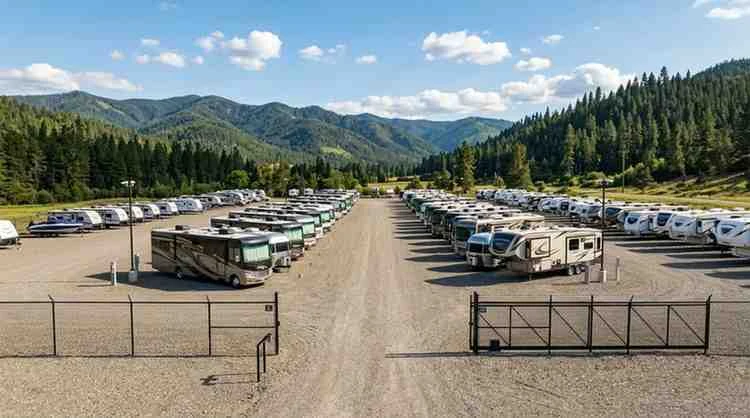
Kamiah’s position in the Clearwater Valley makes it a natural hub for recreational vehicle owners throughout the region. Residents of Kamiah, Kooskia, Stites, Grangeville, Orofino, and the surrounding communities all share the same outdoor lifestyle — and the same off-season storage challenge that comes with it.
The Clearwater River is one of Idaho’s premier fishing rivers, drawing steelhead anglers from across the Northwest every season. The surrounding national forest and wilderness areas support world-class elk and deer hunting. The canyon roads and mountain terrain attract ATV riders, motorcyclists, and campers. And the Snake River — accessible from Lewiston less than an hour to the west — offers boating and water recreation that keeps boat trailers busy from spring through fall.
All of that activity means a lot of recreational vehicles that need somewhere to go when the season ends. A driveway or barn lot can handle one, maybe two. Beyond that, a proper storage facility is the practical answer.
Choosing Kamiah storage also means choosing a facility that understands the local use patterns — the hard freezes that make October winterization essential, the spring rush to retrieve vehicles before the steelhead opener, the hunting season requests for early fall access. These rhythms are built into how Elk Country Storage Co. operates, because the people running it are part of the same community.
Is RV Storage in Kamiah the Right Solution for You?
If you own an RV, camper, motorhome, travel trailer, or fifth wheel in the Clearwater Valley, secure off-season storage in Kamiah is almost certainly the most cost-effective way to protect that investment and simplify your property management through the off-season months.
The combination of central Idaho winters, the long off-season between November and April, and the practical challenges of home storage for a large vehicle all point toward the same solution: a properly managed, secure storage facility close to home.
Elk Country Storage Co. offers RV storage in Kamiah with month-to-month lease flexibility, online reservations, and 24/7 bill pay. Whether you’re storing a compact travel trailer or a full-size motorhome, the process starts with a quick check on availability.
Browse our storage unit size guide to help determine the right space for your vehicle, then reserve online or call us at (208) 630-3753 to confirm availability and get your RV into safe storage before the Idaho off-season sets in.